
Emergency Information Resource Management Platform of the Ministry of Emergency Management (MEM)

Activating the Value of Data Assets through Data Visualization to Advance the Scientific Development of Emergency Management

Client Profile

Emergency Information Resource Management Platform of the Ministry of Emergency Management

It is responsible for establishing a disaster reporting system, issuing unified disaster information, coordinating the development of emergency response capabilities and material reserves, and executing unified dispatch during disaster relief operations. The Ministry also organizes the development of disaster relief systems, provides guidance for emergency and natural disaster rescue, and serves as the national command center for major disaster response.Its responsibilities further include directing the prevention and control of fires, floods, droughts, geological disasters, and other hazards, as well as overseeing comprehensive emergency management, and supervising emergency management in industries such as mining, manufacturing, and commerce.

Industry Challenges

With the accumulation of massive data resources through informatization, how can MEM activate and structure these assets to advance the development of national emergency management?
How can big data concepts, resources, technologies, and applications be fully leveraged to achieve data aggregation and integration, enabling cross-source comparison and analysis to reduce regulatory blind spots, and improve regulatory coordination and efficiency?
How to realize precise search and positioning of big data to enhance real-time behavioral monitoring, sense and detect patterns in the behavior of safety supervision targets, proactively identify potential production safety hazards, and improve the precision and effectiveness of supervision?
How to achieve big data-driven prediction and early warning, implement risk-based supervision, reduce administrative costs, and improve the scientific basis of decision-making?

Solution

Supervision and Management Visualization Scenarios

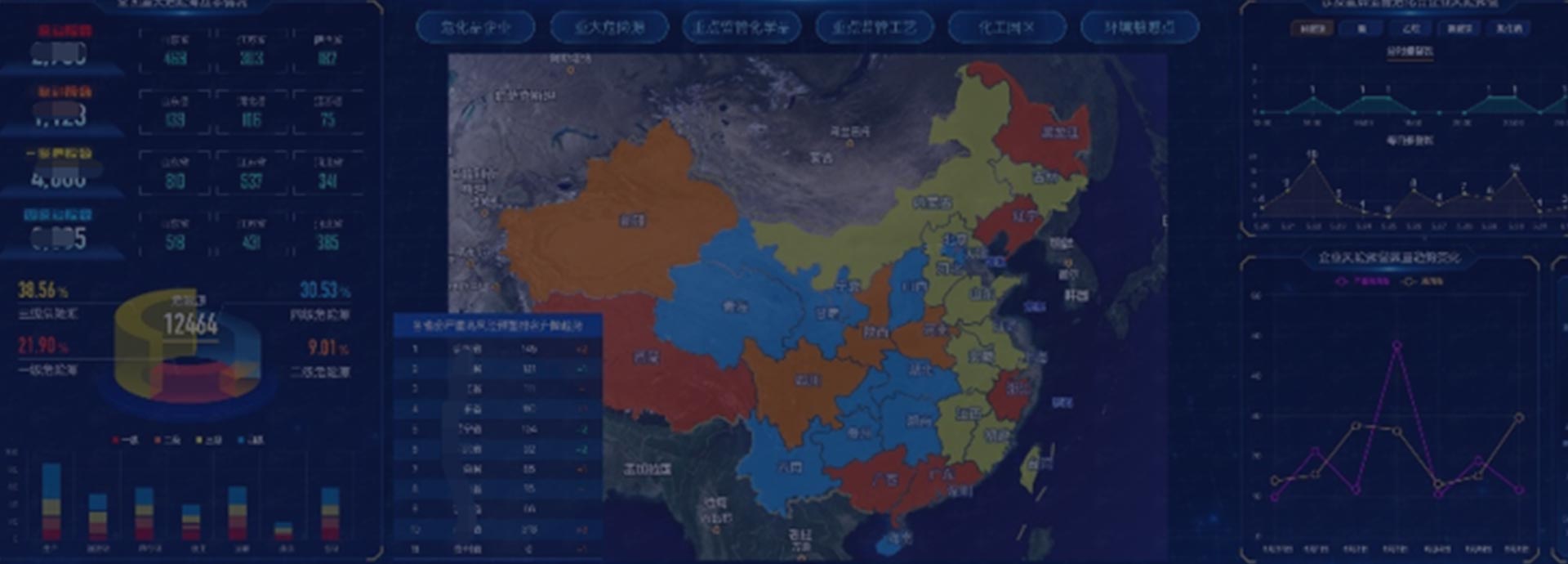
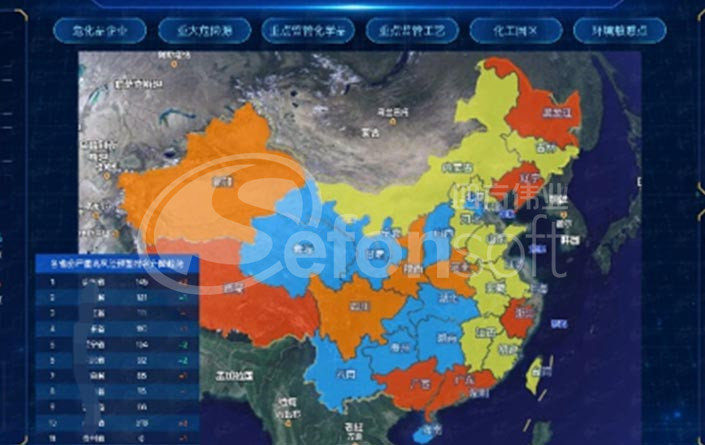
Supervision and management content monitoring includes, but is not limited to: administrative licensing, administrative law enforcement, routine supervision, integrity management, safety inspections, supervision of rectification orders, dynamic safety performance assessment, emergency management statistical analysis, and Internet + regulation.

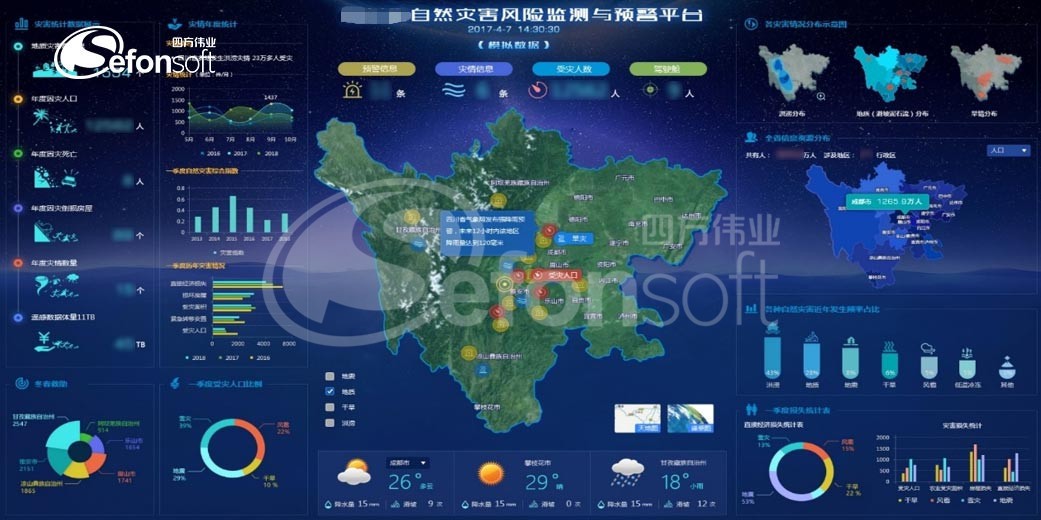
Monitoring and Early Warning Visualization Scenarios

Provides monitoring for risk assessment, early warning, and disaster prevention and control.

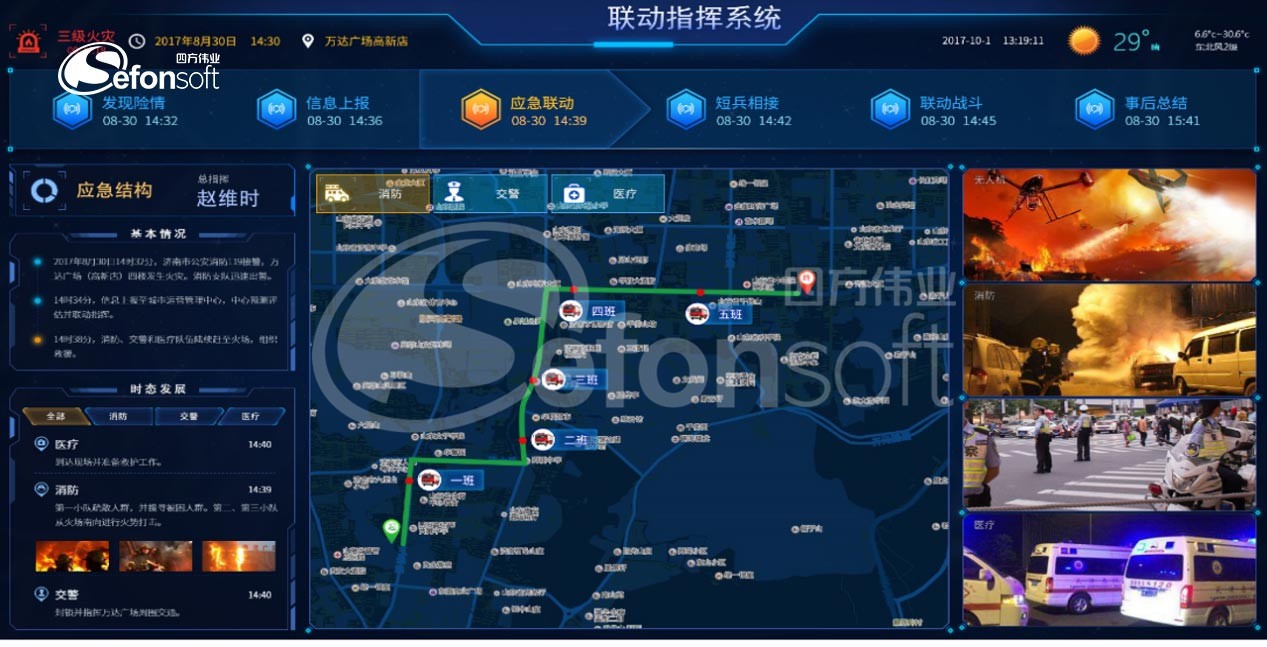
Decision Analysis Visualization Scenarios

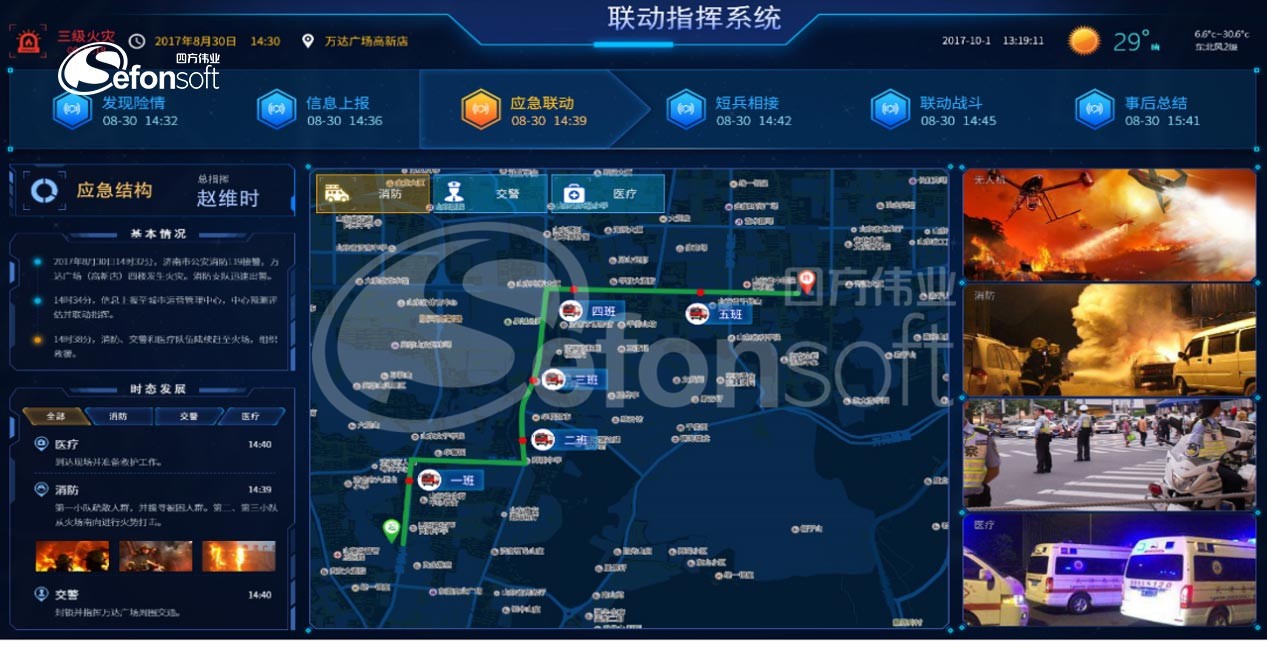
Including, but not limited to: situational awareness, joint command, comprehensive assessment, assisted analysis, and emergency search operations.

Data Governance Process Visualization

Uses topological diagrams to hierarchically display various data entities and process metadata involved in emergency command. From a macro perspective, visualizes the data flow between storage media; supports drill-down from data warehouse layers to databases, then further to tables; and enables granularity control through multi-level charts.

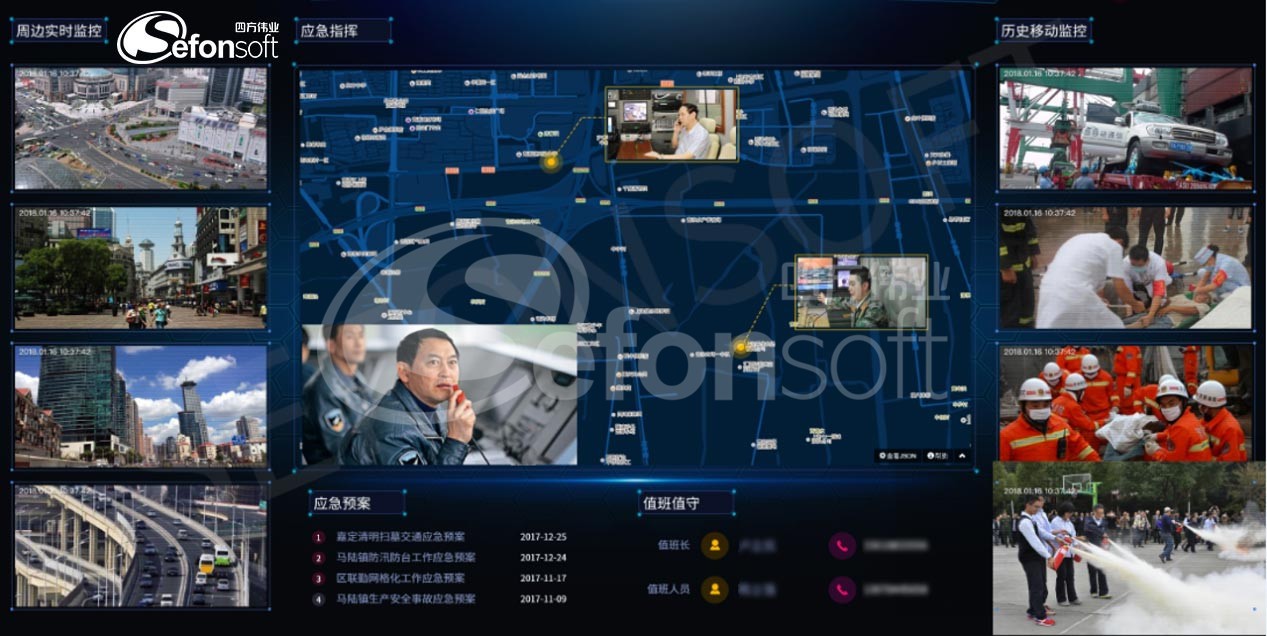
Command and Rescue Visualization Scenarios

Based on emergency-related business systems, presents key information on emergency command and rescue, covering emergency drills, contingency plans, emergency decision-making, command and dispatch, disaster assessment, and emergency resource allocation.

"Egis One Map" Visualization Scenarios

The urban emergency decision-support system leverages spatial information sharing platforms, GIS, and data mining technologies, combined with emergency plans, knowledge bases, case libraries, event information, and environmental data, to automatically generate emergency work plans. Plans can be refined through human-computer interaction to ensure scientific and effective responses to incidents.

User Benefits

The launch of the Emergency Information Resource Management Platform, powered by data visualization, provides a solid data foundation for transforming production safety supervision from a passive approach to a problem-oriented model.

By integrating both online and offline approaches, the platform enables online detection, proactive hazard identification, integrity-based supervision, and risk prevention and control in production safety oversight.

Related Cases

Big Data Resource System of the Ministry of Civil Affairs

This system leverages informatization to support and amplify civil affairs undertakings. By establishing the Ministry of Civil Affairs’ big data resource system, it provides one-stop services ranging from data preprocessing, self-service analysis, to advanced report configuration and presentation. This effectively resolves issues of data sharing, service alerts, and business collaboration across multiple civil affairs business lines, thereby enhancing the big data analytical and decision-making capabilities of the ministry.

More
National Grain Consultation Center Visualization

The State Administration of Grain initiated the construction of the National Grain Management Platform to standardize daily grain depot operations and business processes, enhance information transparency and centralization, and enable administrative authorities to remotely monitor grain reserves, stock conditions, quality, production safety, market trends, and depot operations nationwide without leaving their offices.

More
Provincial Development and Reform Commission Information System Integration and Big Data Development

The objective was to build a standardized, open, stable, and reliable information system integration and big data platform for the Provincial DRC, enabling information resource sharing, big data mining, and the analysis and early warning of macroeconomic and social development indicators. The platform reduces uncertainty in economic activities and provides data-driven decision support for the Provincial Party Committee and Provincial Government.

More

Relevant Solutions

Begin Your Data Intelligence Journey Today

Consultation Free Trial