A Province Airport Big Data Platform

Client Profile

A Province Airport Big Data Platform

A group company is a large, diversified enterprise operating across multiple regions, with businesses spanning airports, ports, intercity passenger transport, and logistics services. It manages several airports, and this project focuses on the construction and implementation of big data and cloud platforms for two of its airports.

Industry Challenges

The airports need to build big data platforms to aggregate data, implement data governance, and develop thematic and specialized data repositories, ultimately realizing data value through data services.
A distributed deployment approach is adopted: localized deployments at each airport support real-time production needs, while non-real-time or cross-airport data services are hosted in a centralized equipment room.
Develop five thematic applications covering operations, passengers, security, logistics, and management. Utilize big data analytics to enhance operational efficiency and drive growth in key business metrics.

Solution

Comprehensive Visualization

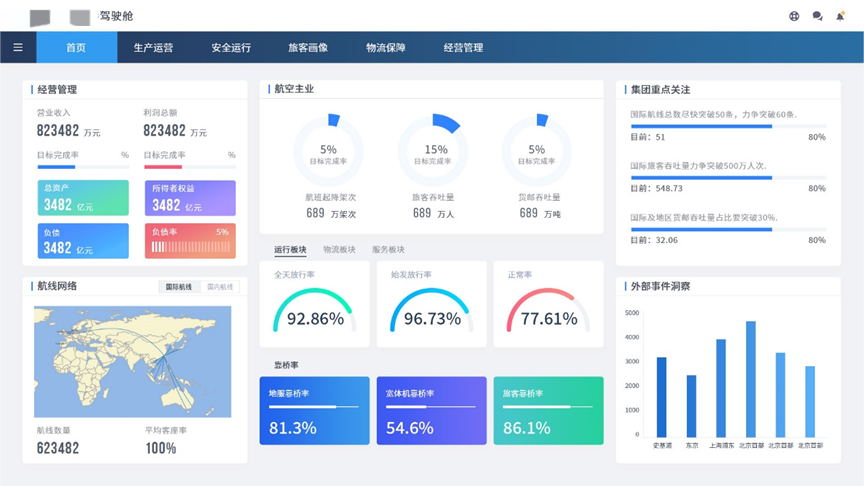
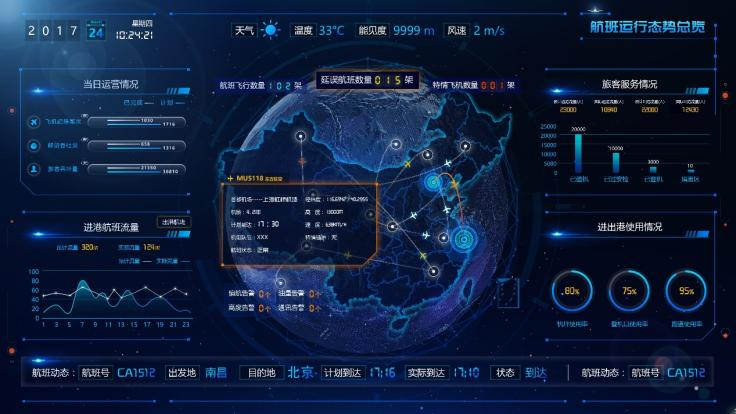
Build an integrated airport operations dashboard to monitor the overall status of the new airport in real-time. The system processes and displays aircraft, vehicle, and personnel movement trajectories, facility and equipment statuses, and related management information. It provides real-time comprehensive analysis, forecasting, and early warning of airport operational conditions. Key performance indicators across production, security, passenger, logistics, and management domains are consolidated into an executive cockpit homepage, showcasing the airport’s performance in core aviation and operational management.

Data Platform Construction

Build a big data platform encompassing data ingestion, cleansing, storage, governance, and application. Develop thematic and specialized data repositories with associated metrics for operations, passengers, security, logistics, and management domains. Complete data standardization, metadata management, data quality control, algorithm modeling, model management, full data lifecycle security management, and master data cleansing and consolidation. Establish data resource and service catalogs. Enable data-driven applications such as operational efficiency evaluation, transfer passenger analysis, flight delay prediction, customer profiling, and supplier profiling.

Thematic Data Reporting

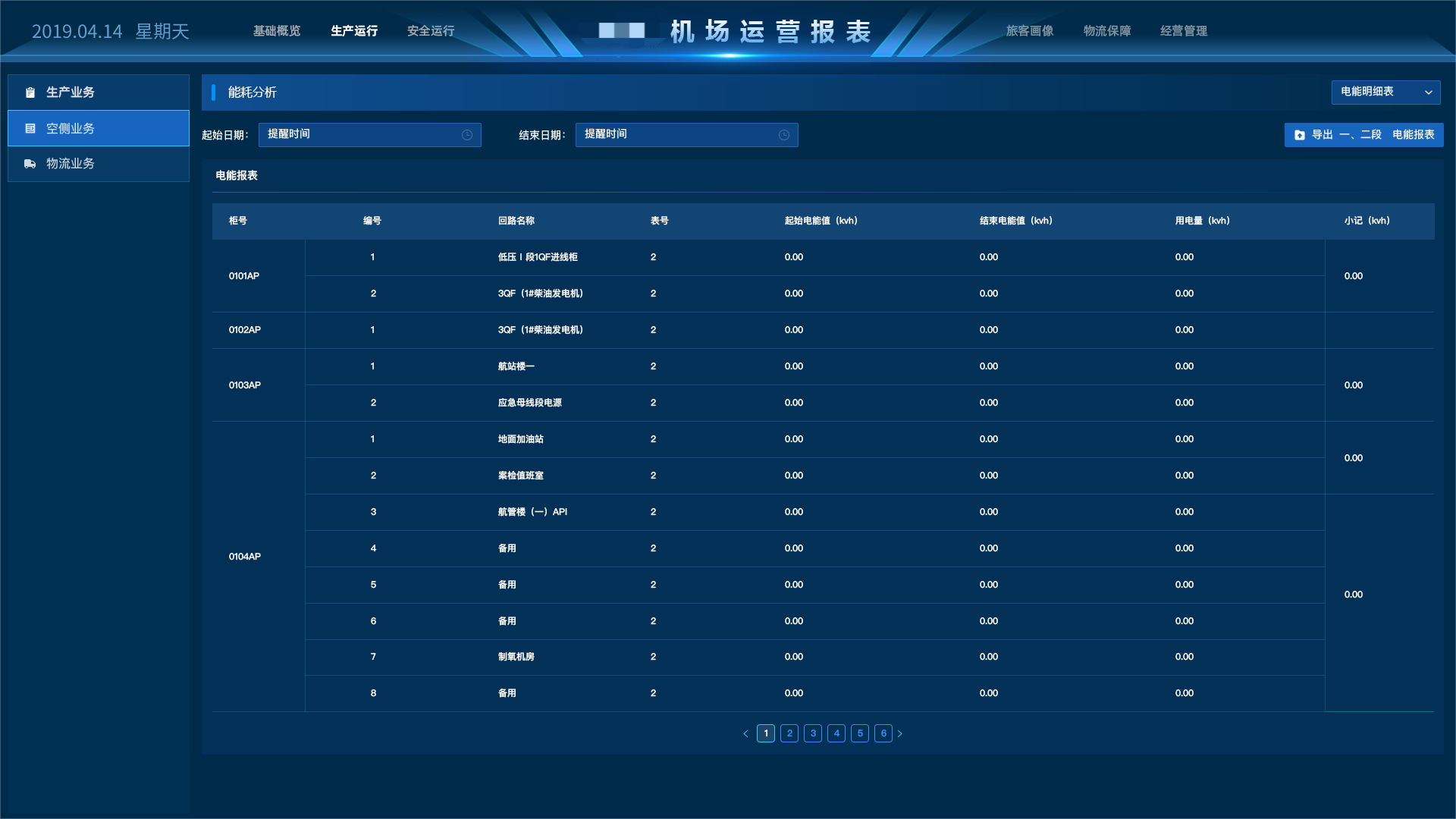
Utilize the BE analytics platform to deliver statistical reports and chart analysis capabilities, meeting the daily reporting and analytical needs of airports and the group. Support complex, China-specific reports with tailored visualization based on report metrics, enabling business users to intuitively monitor real-time status and analytical insights across business domains.

App Support

Enable leaders to monitor overall airport operations anytime, anywhere through mobile devices. The platform adapts to various mobile resolutions and provides comprehensive visualization of reports and executive dashboard metrics.

User Benefits

Stable Business Operations

Build a big data platform that ensures the stable operation of traditional information systems and business processes while effectively addressing “information silos” caused by siloed system architectures.

Technology Fusion

Combine visualization, IoT, and AI analytics technologies to provide agile data and technical support for business innovation and ecosystem development.

Resource Consolidation

Accelerate the integration of information and technology resources within the group, promote resource sharing, and empower business optimization and innovative applications across all group units.

Refined Management

Enhance safety and production assurance through data-driven reports, improve precision management, and drive quality and efficiency improvements—advancing the group’s digital transformation and strengthening its core competitiveness.

Related Cases

A City Airport Visualization Platform

Develop an integrated visualization and monitoring platform tailored to the airport group’s characteristics. Leveraging big data, IoT sensing, virtual simulation, and digital twin technologies, the platform enables intelligent, precise, and scientific management of personnel, aircraft, and equipment. This enhances operational efficiency, management levels, and decision-making capabilities to support comprehensive airport control.

More
A City Airport IOC

A city airport is developing an intelligent data center application system that integrates data aggregation, governance, application, intelligent service algorithms, and comprehensive visualization. Built on a cloud computing platform and various business systems, it aims to meet data management and intelligent operational needs. The system supports both data asset operations and sharing, as well as integrated business applications, ultimately maximizing the value of the airport’s data assets.

More
Kunming Airlines Data Analysis Platform

As a relatively young airline in China, Kunming Airlines urgently requires an intelligent data analytics and visualization platform based on big data technology. This platform should flexibly support rapid analytical models across multiple domains including passenger services, e-commerce, maintenance, cargo, and scheduling. The goal is to drive data-driven improvements in air cargo marketing and passenger services, accurately grasp market trends, uncover passenger potential value, actively develop frequent flyer programs, enhance operational efficiency, enable refined management, and increase profitability.

More
Large-Screen Visualization System for Network Control Center of Urumqi Rail Transit Industry Headquarters

The Rail Transit Command Center serves as the central coordination hub for the entire urban rail network, responsible for synchronizing operations between line control centers and operating entities. Its functions encompass comprehensive monitoring, multi-line and multi-system operational coordination, emergency command, and information sharing. In routine scenarios, it undertakes coordination and assistance tasks; in abnormal situations, it provides robust emergency command capabilities.

More
Anhui Expressway Information Management

Based on the traffic conditions, vehicle flow, and meteorological information of the Anhui Province expressway network, combined with service area business operations and consumer spending,supply chain data, a association analysis is conducted to examine the relationships among these datasets. A model is established to reveal the relationship between service area operational revenue and incoming traffic volume.

More

Relevant Solutions

Begin Your Data Intelligence Journey Today

Consultation Free Trial