Urban Digital Vital Signs System

Application Scenario

Urban Digital Vital Signs System

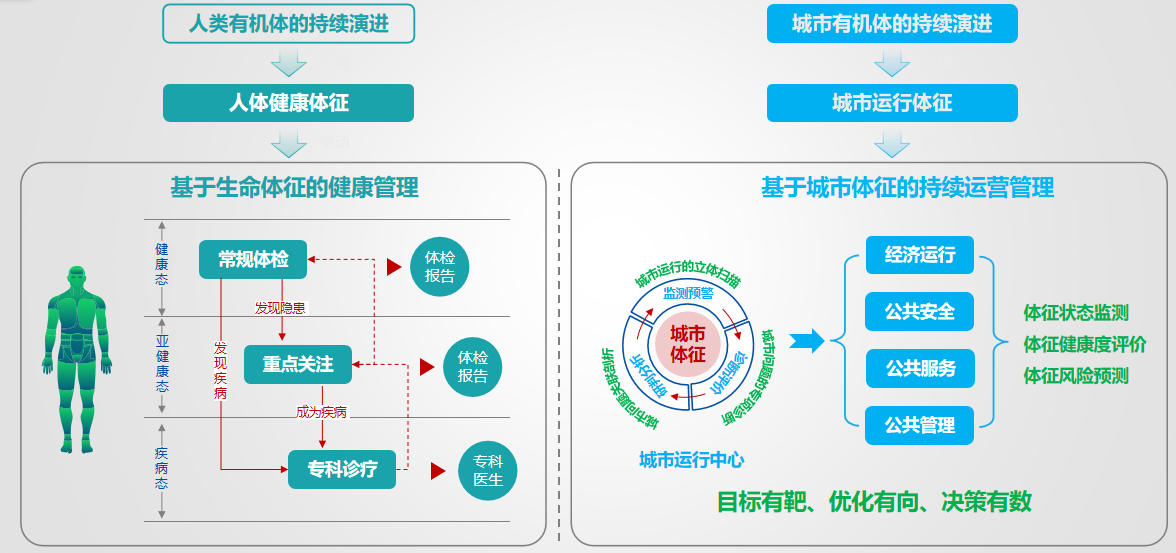
 Various "urban diseases" caused by urbanization and industrialization have become major obstacles to sustainable and balanced urban development. Establishing a scientific system for identifying urban problems and risks has become a pressing concern for city administrators and social scholars alike.

Industry Challenges

As city managers, governments have built numerous information systems; however, few are designed specifically for decision-makers and frontline civil servants.
Expand all
Daily management lacks comprehensive, effective, and timely data intelligence, making it difficult to gain real-time insight into overall city operations and key performance indicators, and limiting effective risk perception and early warning capabilities.
Expand all
Traditional urban operation management methods are reactive, making it challenging to prevent various urban issues before they arise.
Expand all
Conventional city services primarily rely on “one-size-fits-all” standard models, which struggle to meet citizens’ personalized and differentiated needs.
Expand all

Holistic Planning

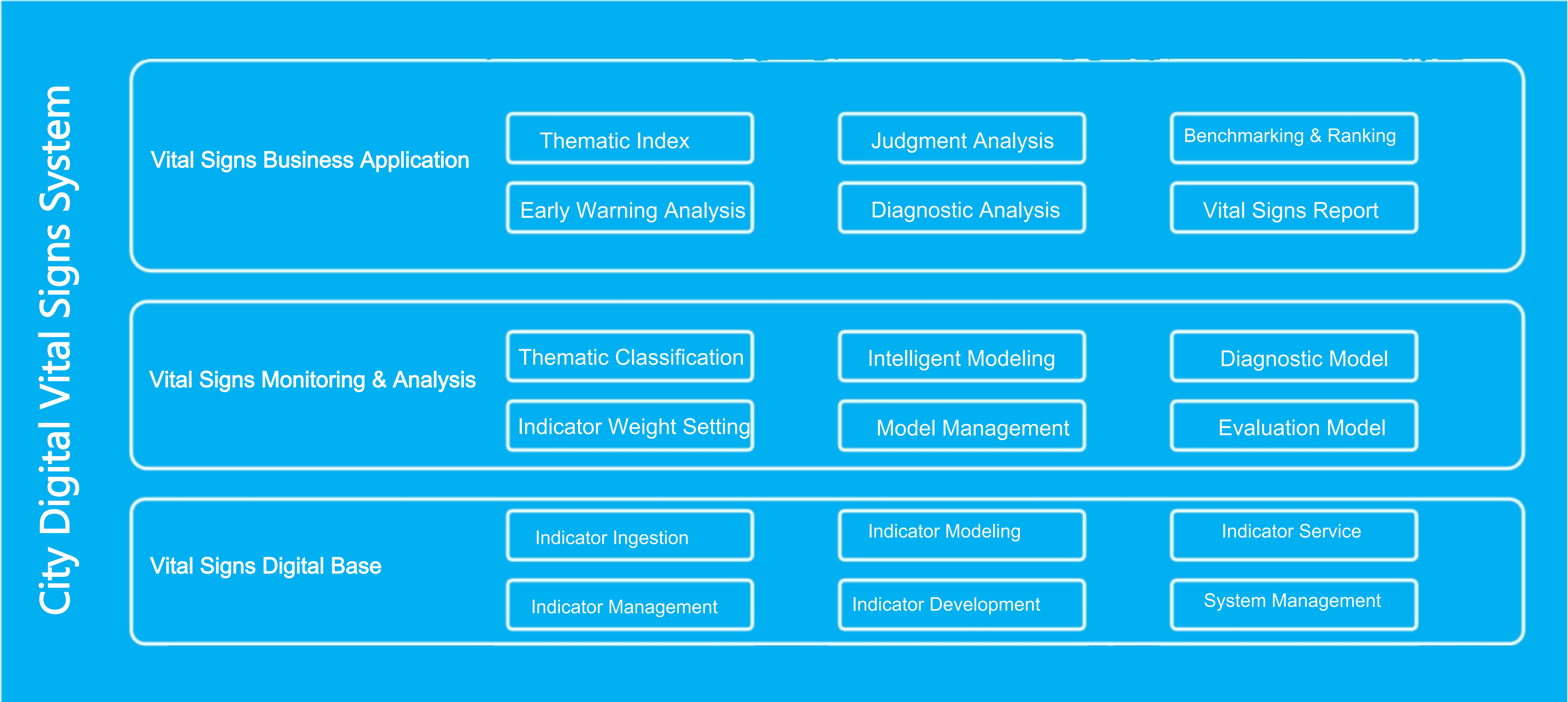
Leveraging the capabilities of the smart city digital foundation and the IOC (Intelligent Operation Center) platform, previously scattered and offline economic data resources are organically integrated to form a comprehensive economic operation analysis repository. Supported by technologies such as artificial intelligence modeling, big data visualization, and AI-driven mining and analysis, four types of application services are established: indicator monitoring and early warning for urban economic operations, analytical report management, comprehensive evaluation and analysis, and trend forecasting.

Implementation Value

Enhancing Urban Issue Awareness:

The Urban Operation Digital Indicators System establishes a comprehensive and timely issue detection mechanism, enabling city managers to identify problems promptly and providing valuable data intelligence for rapid response.

The Urban Operation Digital Indicators System establishes a comprehensive and timely issue detection mechanism, enabling city managers to identify problems promptly and providing valuable data intelligence for rapid response.

Improving Urban Operational Efficiency

The system can detect potential risks and issues in real time, providing early warnings and enabling proactive interventions. This effectively prevents public service disruptions caused by urban operational failures and enhances overall city efficiency.

The system can detect potential risks and issues in real time, providing early warnings and enabling proactive interventions. This effectively prevents public service disruptions caused by urban operational failures and enhances overall city efficiency.

Optimizing Urban Planning and Management

Through data-driven analysis, the system identifies citizens’ concerns and emerging needs, offering targeted recommendations and measures for urban planning and management—for example, optimizing public transportation routes or addressing environmental pollution.

Through data-driven analysis, the system identifies citizens’ concerns and emerging needs, offering targeted recommendations and measures for urban planning and management—for example, optimizing public transportation routes or addressing environmental pollution.

Strengthening Urban Safety and Emergency Response

The system continuously monitors various safety risks and hazards, allowing for timely detection and resolution. It supports proactive prevention and rapid response to emergencies, effectively safeguarding citizens’ lives and property.

The system continuously monitors various safety risks and hazards, allowing for timely detection and resolution. It supports proactive prevention and rapid response to emergencies, effectively safeguarding citizens’ lives and property.

Enhancing Urban Service Quality

By analyzing data on citizens’ needs and feedback, the system enables more targeted improvements to urban services, such as optimizing healthcare resource allocation or improving employment opportunities.

By analyzing data on citizens’ needs and feedback, the system enables more targeted improvements to urban services, such as optimizing healthcare resource allocation or improving employment opportunities.

Begin Your Data Intelligence Journey Today

Consultation Free Trial