
Economic Operation Analysis System

Application Scenario

Economic Operation Analysis System

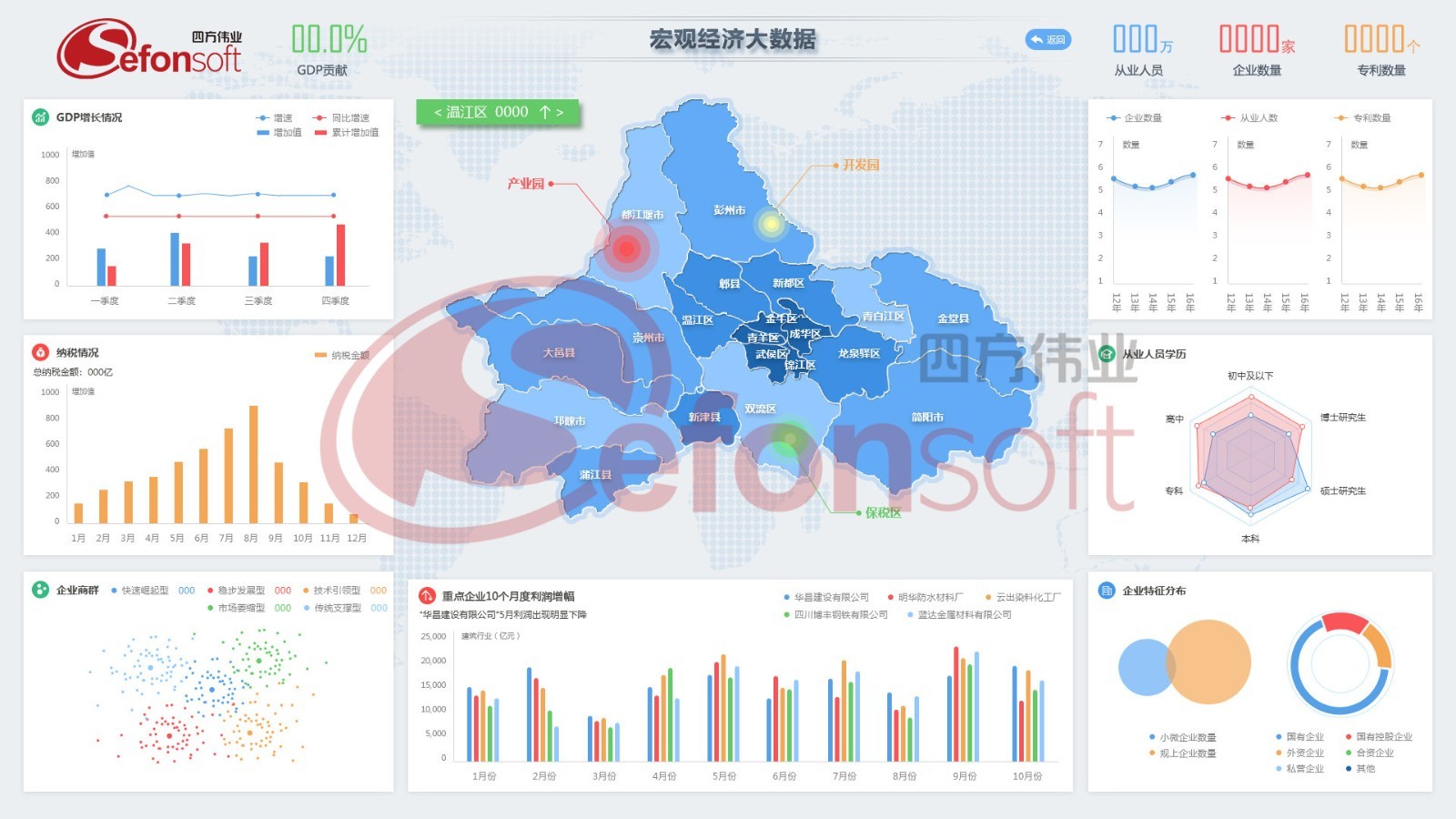
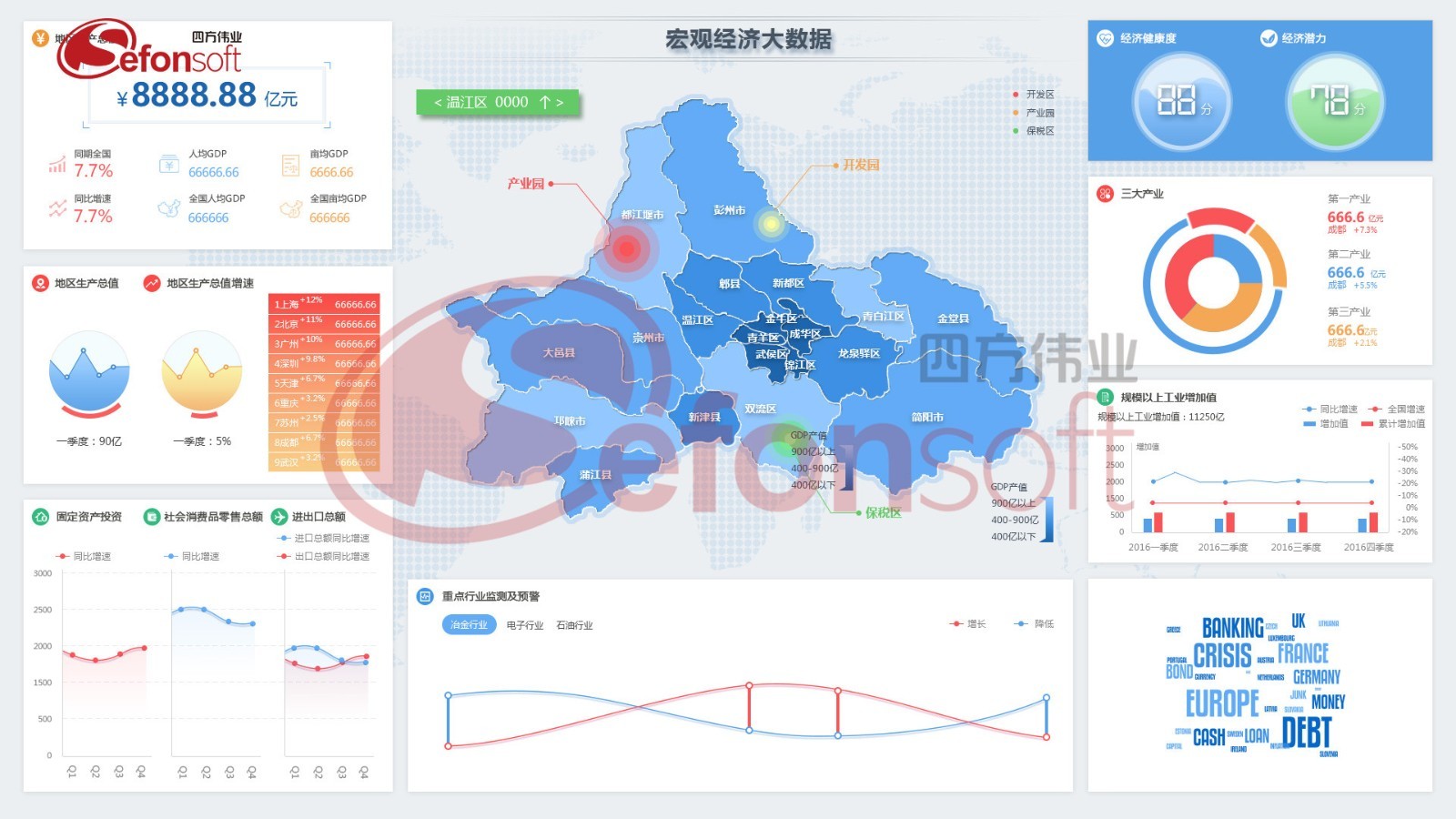
To address the limitations of Smart City IOC projects—where applications are often superficial, underutilized, and with unclear value—cross-departmental, city-wide data application scenarios are being explored. Using local government economic situation analysis and scheduling meetings as a breakthrough scenario, the Economic Operation Analysis System is designed to establish a monitoring, early-warning, and analytical framework for local economic operations. It supports economic performance analysis and report preparation on key economic indicators, improving the efficiency and quality of economic reporting. This provides leaders with comprehensive, timely, accurate, and reliable insights for decision-making, enhancing the precision, timeliness, and visual clarity of economic monitoring and analysis.

Industry Challenges

Current urban economic management lacks a comprehensive, timely system for monitoring key economic indicators and project progress, leading to isolated, fragmented, and delayed management.
Expand all
There is no integrated macro-to-micro evaluation framework, resulting in incomplete or unscientific assessments of economic factors.Absence of predictive mechanisms for economic trends hinders early risk prevention and limits the forward-looking nature of economic policy-making.
Expand all
Traditional economic analysis processes are cumbersome: indicator data processing is manual, charts and explanations cannot be generated automatically, report revision cycles are long, and historical or current data cannot be quickly retrieved or analyzed during scheduling meetings.
Expand all

Our Methodology

Report Management

The system follows the economic operation analysis workflow of “Indicator Variation Monitoring → Problem Identification → Cause Analysis → Policy Recommendations.” It provides functions such as “indicator monitoring and early warning,” “problem discovery and analysis,” and “report preparation and publication,” enhancing the role of data in supporting economic analysis and assisting in the preparation of monthly city-wide economic reports.

Trend Prediction

A trend correlation mechanism is established between high-frequency business data and economic statistical indicators, enabling real-time prediction of lagging statistical data and timely perception of economic trends. For example, real-time industrial electricity consumption can be used to predict growth in large-scale manufacturing, while highway freight data can forecast logistics and warehousing output growth.

Monitoring & Early Warning

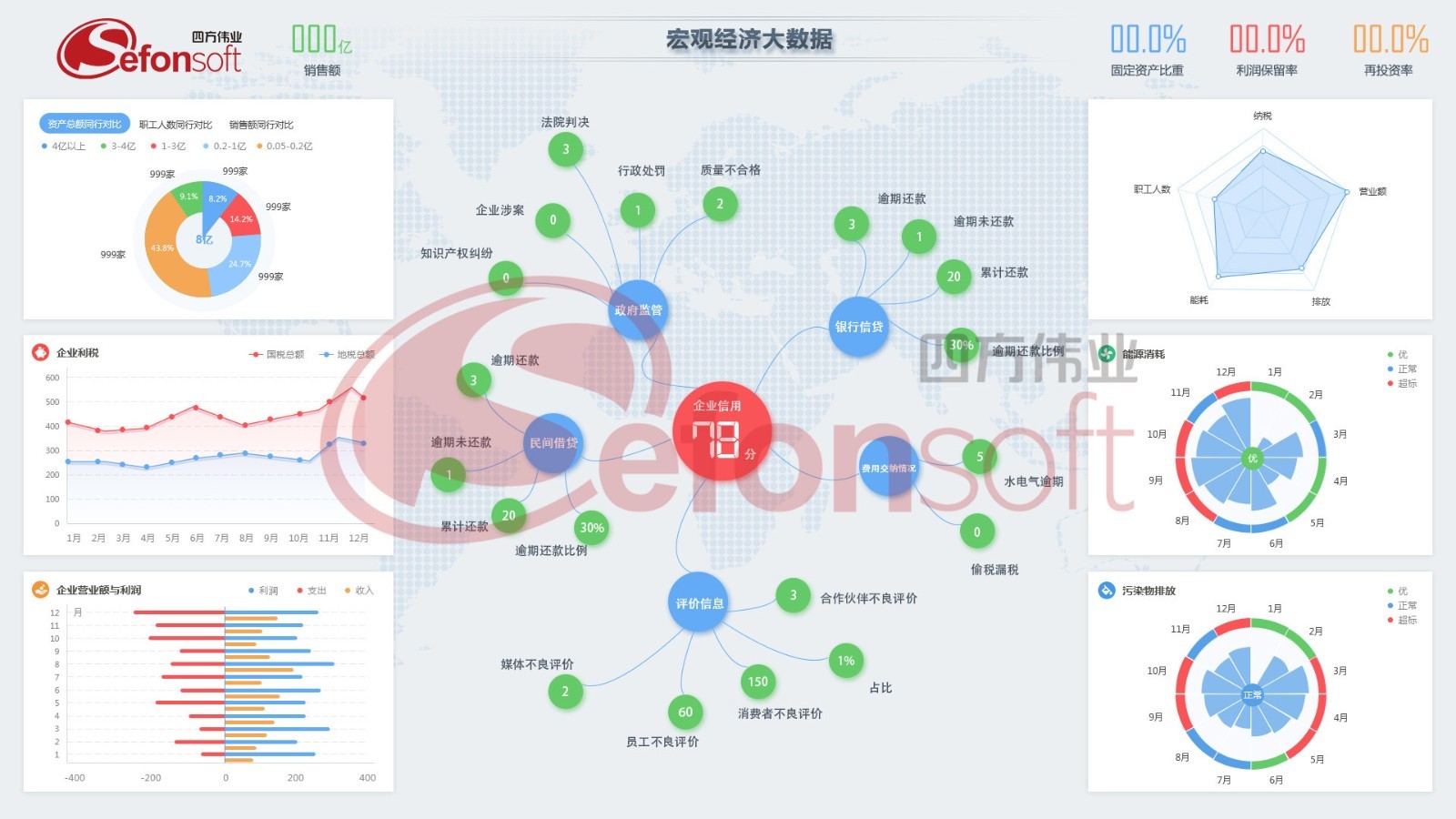
Monitoring and early warning are implemented through four functions: indicator monitoring, highlight analysis, benchmarking, and anomaly alerts. Indicators and detailed data are analyzed across three levels: macro (economic fundamentals), meso (industries and parks), and micro (key projects and enterprises). Comparisons are made across regions, historical data, and target goals to identify gaps and issue timely alerts, analyzing key economic indicators to highlight strengths and weaknesses.

Evaluation & Analysis

Market entity activity evaluation serves as a “barometer” of the market environment and a “weather gauge” of real-time national economic performance. It provides a scientific, comprehensive, and timely assessment and ranking of enterprise development capabilities within the jurisdiction. This quantitative analysis supports policy formulation and adjustment for industrial transformation, investment attraction, and enterprise development initiatives.

Consult Now Free trial

Holistic Planning

Implementation Value

Enhancing Efficiency of Economic Operation Analysis

By integrating big data technologies with government economic work, a “data-driven, data-informed, data-managed, data-innovated” operational mechanism is established. Routine and repetitive tasks in the economic operation analysis process are automated by the system, enabling economic reports and departmental performance indicators to be generated automatically based on predefined templates and calculation rules.

By integrating big data technologies with government economic work, a “data-driven, data-informed, data-managed, data-innovated” operational mechanism is established. Routine and repetitive tasks in the economic operation analysis process are automated by the system, enabling economic reports and departmental performance indicators to be generated automatically based on predefined templates and calculation rules.

Strengthening Urban Economic Monitoring Capabilities

By integrating diverse business data from economic operation management, a comprehensive monitoring, early-warning, evaluation, and trend prediction system is established across macro, meso, and micro levels. This forms the “insightful eyes” for economic visibility and the “intelligent brain” for economic analysis, enabling leaders to accurately understand economic trends, analyze conditions, and enhance the city’s capabilities in monitoring, early warning.

By integrating diverse business data from economic operation management, a comprehensive monitoring, early-warning, evaluation, and trend prediction system is established across macro, meso, and micro levels. This forms the “insightful eyes” for economic visibility and the “intelligent brain” for economic analysis, enabling leaders to accurately understand economic trends, analyze conditions, and enhance the city’s capabilities in monitoring, early warning.

Begin Your Data Intelligence Journey Today

Consultation Free Trial